Multi-Agent Orchestration
Deterministic execution loops, cross-agent session coordination, and unified human-in-the-loop permission gates.
Multi-Agent Systems · Local AI · Developer Infrastructure
We bridge modern AI agents with physical hardware — building resilient multi-agent runtimes, isolated environments, and recovery utilities designed for daily production work.
Deterministic execution loops, cross-agent session coordination, and unified human-in-the-loop permission gates.
Low-latency inference profiles and zero-copy data pipelines optimized for consumer Apple silicon and edge devices.
End-to-end automation for research, asset orchestration, and document processing that eliminates operational toil.
Every workflow and script is verified on bare metal. If we show it, it is 100% reproducible.
Software must respect thermal and memory limits. We extract peak performance from existing machines.
Any operation touching storage or secrets enforces strict read-only safety, zero retention, and clean teardown.
Restore and extract Time Machine archives from vintage Apple Time Capsules. Native AFP protocol bypass for modern macOS with zero Finder hangs.
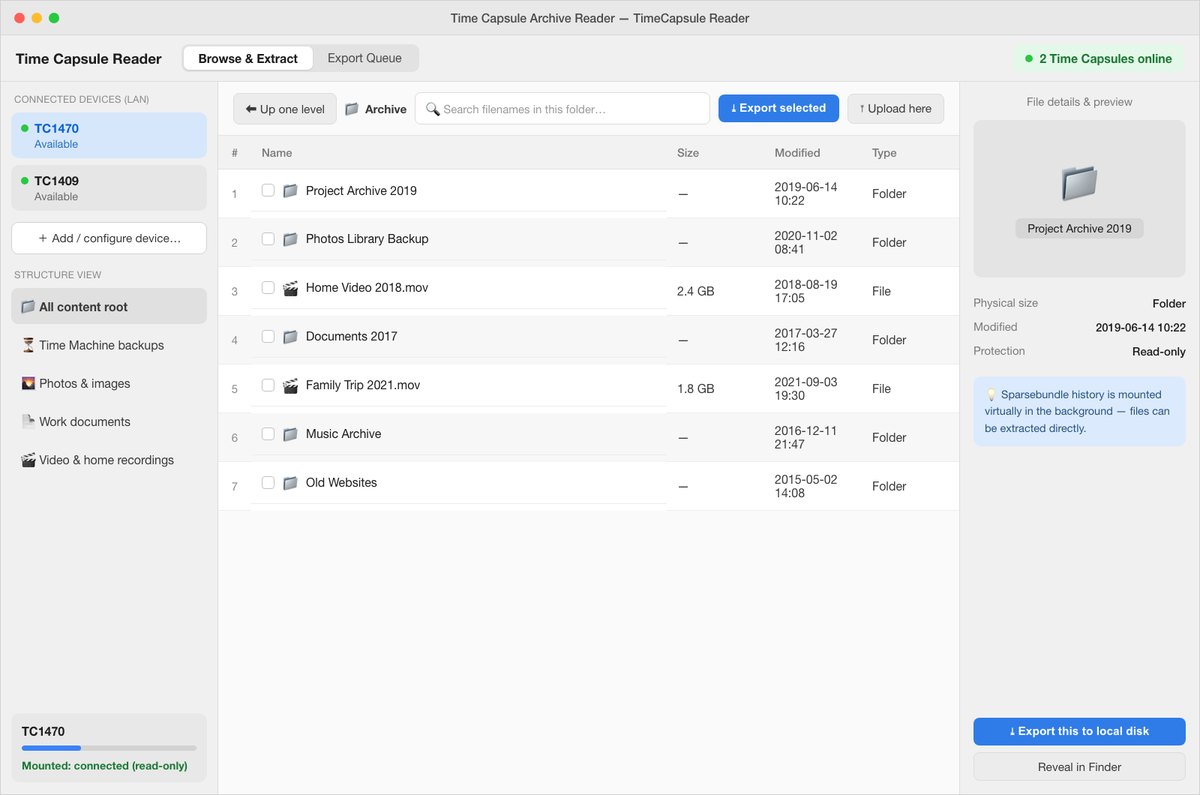
bands/ chunks.
Instantly detects local Time Capsule hardware without manual IP or port entry.
Reassembles raw band chunks on-the-fly into an instantly navigable folder hierarchy.
Bypasses macOS Spotlight indexing to guarantee completely freeze-free browsing.
1MB chunked streaming with per-file resume, checksum validation, and live progress telemetry.
Supports Apple Time Capsule A1470 (802.11ac) and A1409 (802.11n) on Apple silicon Macs across your local network.
Native macOS Chromium rendering with remote VPS egress. Familiar local window, fully isolated traffic, zero DNS leaks, and instant clean teardown.
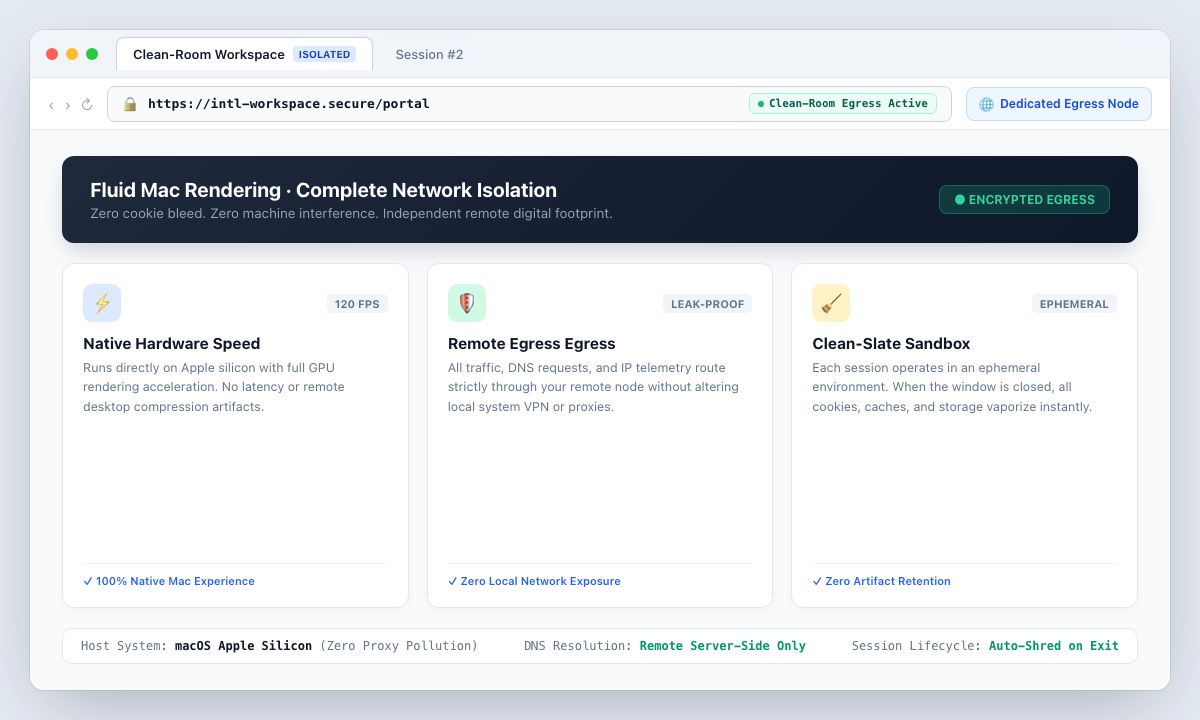
Routes all browser network traffic through a remote Linux node via dynamic SSH SOCKS5 tunneling.
Hostnames resolve entirely at the remote node, eliminating DNS leaks and local ISP tracking.
Automatically derives browser timezone and locale from the egress IP to ensure signal consistency.
Launches inside an isolated throwaway profile — closing the window destroys session state and tunnel.
Runs on macOS with SSH key access to any standard Linux VPS. Tunnels initialize upon launch and terminate cleanly on exit.
A resilient coordination and execution platform for multi-agent ecosystems. One runtime host coordinates heterogeneous agents—including Claude, DeepSeek, and custom coding harnesses—with cross-agent federated memory, lifecycle orchestration, and universal MCP integration.
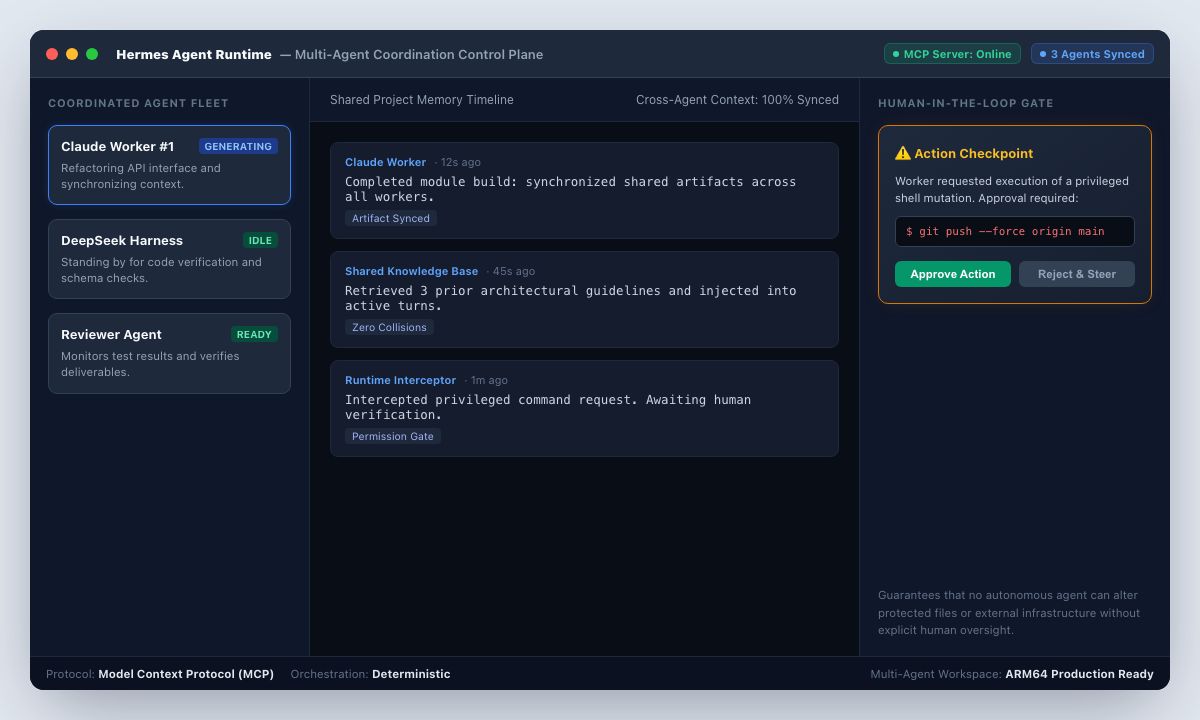
Agent Runtime Protocol (ARP) connects diverse agent workers—dispatching tasks, tracking dependencies, and steering runs via WebSocket RPC.
Centralized SQLite/FTS5 store ingests and unifies timelines, prompt turns, and deliverable artifacts across all collaborating agents.
Centralized permission layer intercepts privileged shell or file commands across every active agent with human-in-the-loop checkpoints.
Dual-plane architecture exposes runtime state, memory retrieval, and multi-agent coordination tools to any MCP client (Claude Desktop, Cursor, Windsurf).
Engineered in TypeScript / Node.js. Natively supports multi-agent adapters for Claude Code, DeepSeek harnesses, and custom agents, with full Model Context Protocol (MCP) compliance.